February 2026 - Unexpected Weather and Housing Rights
< Back to All Newsletters
Welcome Note
As we enter this unusually chilly month in Florida, it’s important to remember that housing rights and protections apply year-round. In this edition, we highlight key fair housing protections and examine eviction trends that often intensify during colder months, when housing instability can place additional strain on families and vulnerable households.
Unexpected Weather and Housing Rights
Did You Know…
Rising winter heating bills and large unpaid utility balances (nationally over 14 million households with severe utility debt) strain family budgets and can push some households toward eviction when combined with rent arrears
Although many states have seasonal protections against winter disconnections, utilities may still disconnect service when bills go unpaid (hundreds of thousands of households are disconnected annually).
Landlords cannot turn off utilities to force a tenant out — such practices may be illegal in many jurisdictions as a form of constructive or “self help” eviction.
Displacement contributes to school instability, missed classroom time, and emotional strain for children and parents alike.
So What Does It All Mean?
Across the U.S., landlords file millions of eviction cases annually, and while not all are specific to winter months, housing courts in some states report higher volumes of filings after the holiday season and into winter as financial pressures grow with increased living costs and utility bills.
Evictions and displacement during colder periods can have especially harsh consequences because families and individuals face increased exposure to cold weather, risk of homelessness, and strain on social services. National data also show that homelessness overall has continued to rise, with increases in the number of people, including families with children, experiencing housing instability.
Regardless of the season, landlords are responsible for providing and maintaining safe, habitable housing under local building codes and health standards. This includes functioning heating systems and proper insulation where required by code, to protect tenant health and safety.
Failure to maintain basic living conditions, like adequate heat, protection from cold, or timely repairs, may violate local habitability standards and give tenants avenues for enforcement through local housing authorities or code enforcement.
What Can We Do?
Under the Fair Housing Act, tenants with disabilities are legally entitled to reasonable accommodations, which are changes to rules, policies, or services, that enable them to use and enjoy their dwelling equally with others. This may include adjustments related to heating or indoor environmental controls if those relate to disability-related needs.
Know your rights: Tenants have the right to safe, habitable housing with functioning heat and utilities. Document and report any maintenance issues promptly and in writing.
Seek assistance early: If cold weather increases your financial burden, explore rental or utility assistance programs and community resources before arrears build into eviction filings.
Be aware that if you were served with an eviction notice, you can call our Eviction Prevention helpline for FREE legal assistance. Call us today at 888-780-0443!
We utilize language line services for tenants with diverse linguistic backgrounds.
If you or someone you know is facing discrimination on the basis of their victimization, or needs legal assistance navigating housing, do not hesitate to give us a call at 407-801-4224 or email us at fairhousing@floridalegal.org
Community Outreach
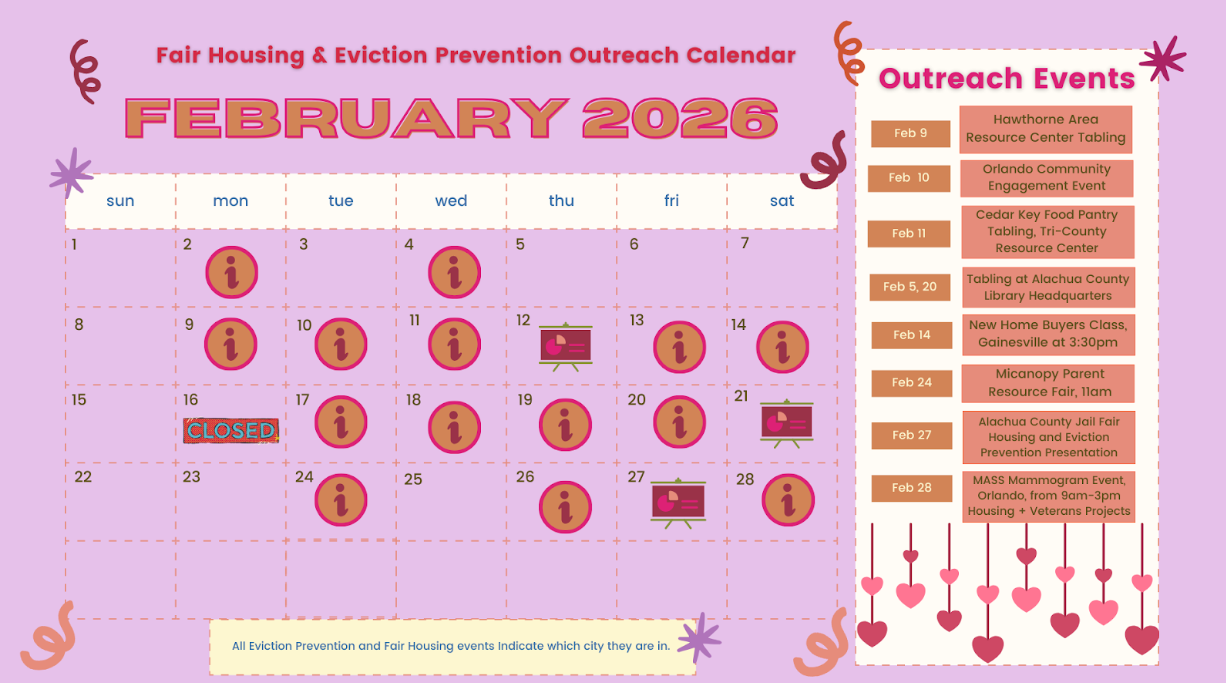
Upcoming Outreach Events
What We’ve Been Up To
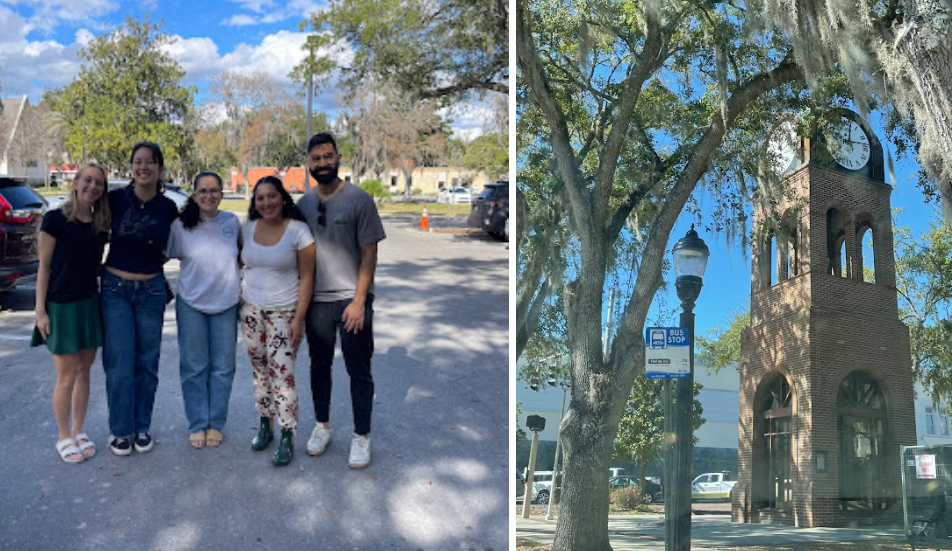
Project Downtown
We extend our sincere thanks to Project Downtown for allowing us the opportunity to partner with you and for your continued commitment to supporting individuals and families in need. Together, we are strengthening access to resources, education, and hope within our community. Through this collaboration, we are able to connect residents with vital information about fair housing rights, eviction prevention resources, and housing stability—especially during times when families may face increased challenges.
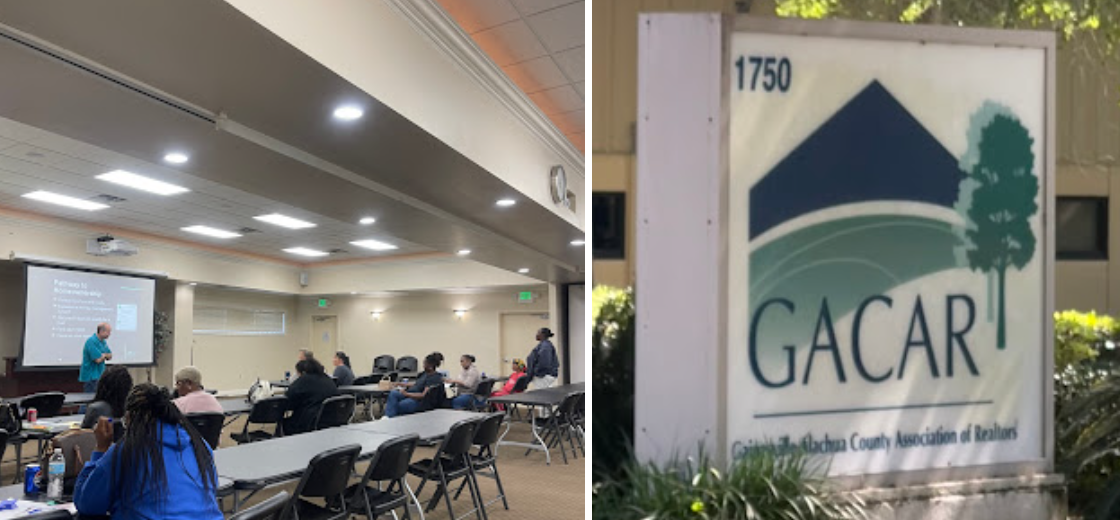
New Home Buyer Class
A huge thank you to Neighborhood Housing & Development Corporation for inviting us to their monthly New Home Buyers Class. It was a wonderful opportunity to share Fair Housing materials and educate new homebuyers about the Fair Housing Act. Our Eviction Prevention team also shared flyers and resources with attendees. Overall, it was a great experience and a pleasure to continue our collaboration with the NHDC!
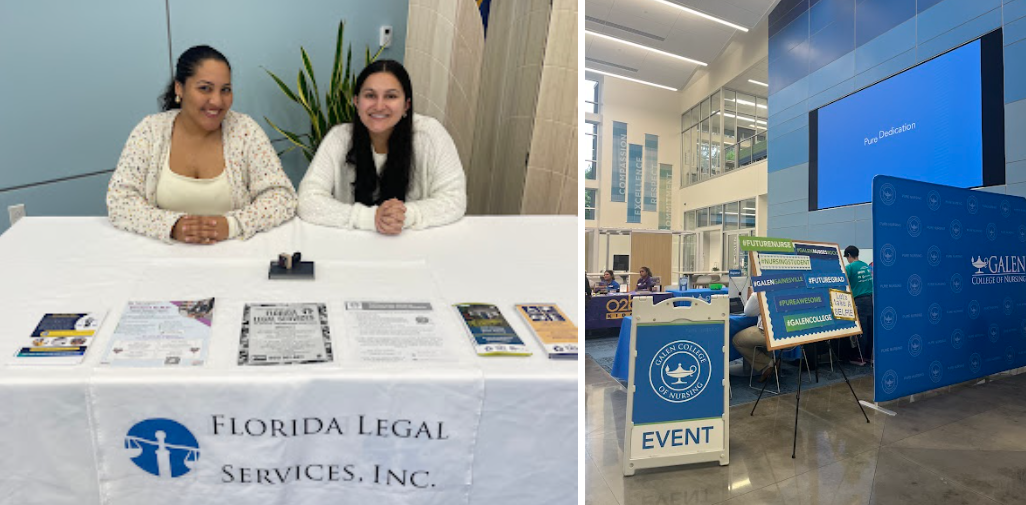
Galen Nursing Resource Fair
The Housing Justice teams participated in the Galen School of Nursing’s Resource Fair over two days, connecting with students and renters in the Gainesville area who may not have been aware of the free services offered by FLS. We are grateful to the Student Affairs Office for consistently including us in their community events.
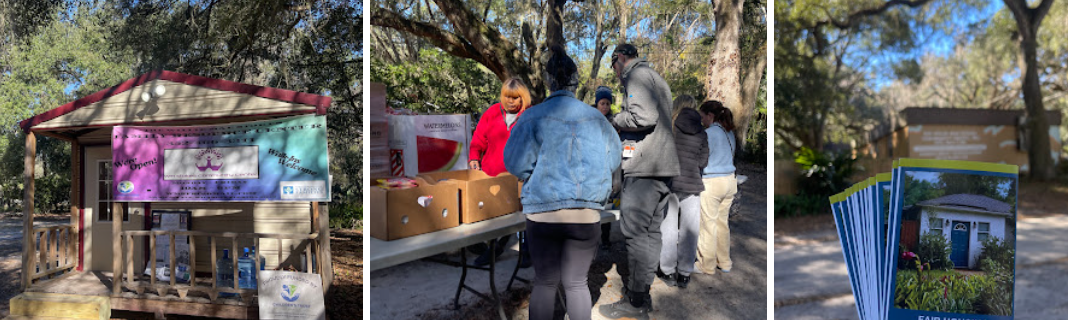
Micanopy Resource Fair and Food Drive
Lola, from Fair Housing, joined the Micanopy Food Drive at the Willie Mae Stokes Center, where food was distributed to community members in need. While supporting the event, we also shared Fair Housing information and resources with attendees. It was a meaningful opportunity to connect with the community and provide both nourishment and education.
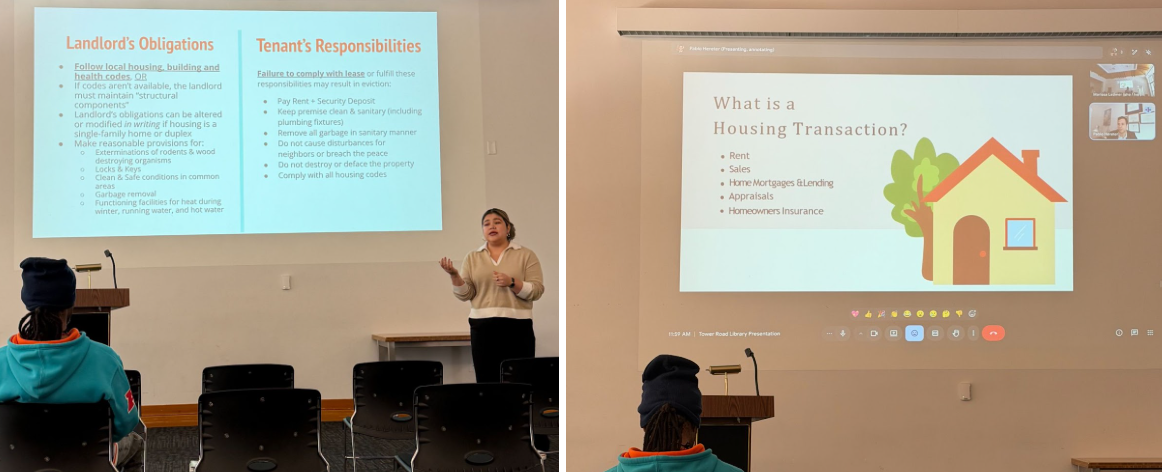
Tower Road Library Presentation
The Housing Justice team hosted a Know Your Tenant Rights presentation at the Tower Road Library Branch, where attorneys, Pablo and Rosemary, educated patrons on their tenant rights. The presentation provided valuable information on housing protections, eviction prevention, and fair housing laws, and offered attendees the opportunity to ask questions and connect with free legal resources.
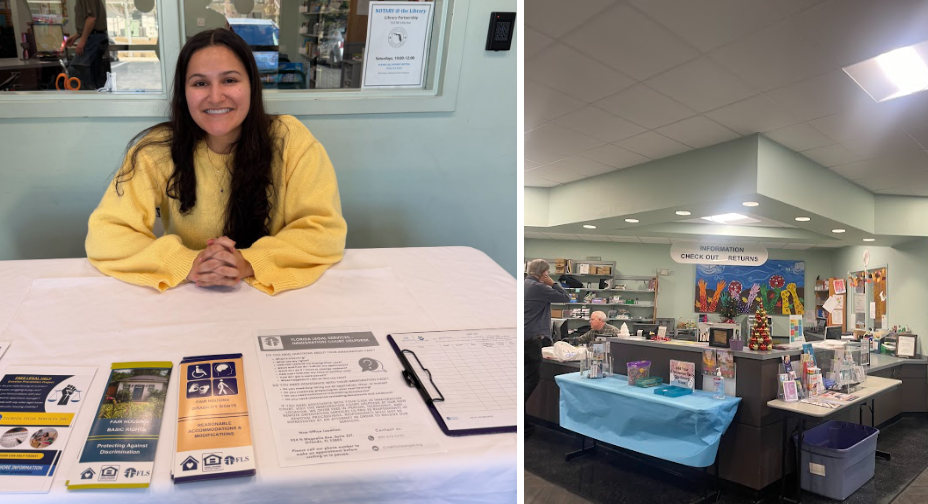
Library Partnership Tabling
Thanks to the continued support of Library Partnership, the Eviction Prevention team has been able to table monthly at the Resource Center. This has been a great opportunity to share information about our housing projects and the other free services offered by FLS. We invite community members to stop by every other Monday from 10:00 a.m. to 2:00 p.m. to learn more about the resources available.
Eviction Prevention in Alachua, Brevard, Dixie, Flagler, Gilchrist, Indian River, Lake, Levy, Marion, Orange, Osceola, Putnam, Seminole, St. Johns, Sumter, and Volusia County:
Eviction Prevention Helpline - CALL: 888-780-0443
This helpline supports tenants, in the counties above, facing eviction or other housing-related challenges. Our operators are available to take calls about landlord-tenant disputes, housing authority voucher issues, and other housing concerns impacting low-income renters. Callers will be connected with an attorney who can provide legal advice over the phone and, in some cases, direct legal representation. Call us today to get the help you need!
The federal Fair Housing Act (FHA) protects you from discrimination in housing based on race, color, religion, national origin, sex, disability, and familial status. This applies to renting, buying, mortgages, appraisals, insurance, and looking for a place to live.
IF YOU THINK YOU’VE BEEN THE VICTIM OF HOUSING DISCRIMINATION, PLEASE CONTACT US AT:
407-801- 4224 (English)
850-680-1729 (Spanish)
fairhousing@floridalegal.org
www.floridalegal.org/fairhousing
IF YOU ARE AN ALACHUA COUNTY RESIDENT FACING BARRIERS TO HOUSING OR AN EVICTION, PLEASE CALL AND FOLLOW THE PROMPTS TO REACH A LIVE ALACHUA COUNTY OPERATOR:
888-780-0443 (English and Spanish)
www.floridalegal.org/evictionprevention
The work that provided the basis for this publication was supported by funding under a grant with the U.S. Department of Housing and Urban Development. The author and publisher are solely responsible for the accuracy of the statements and interpretations contained in this publication. Such interpretations do not necessarily reflect the views of the Federal Government.