July 2026 - Back to the Basics
< Back to All Newsletters
Welcome Note
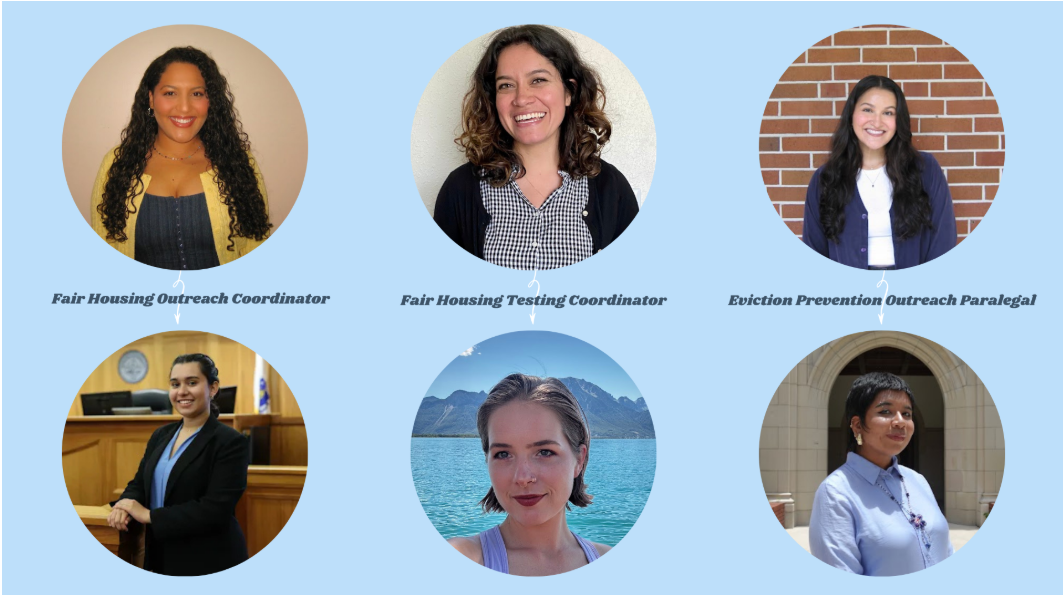
As we welcome a new month, we have some bittersweet news to share. This August, three valued members of our team—Lola, Marissa, and Pia—will be embarking on new adventures and moving on from their roles. While they will no longer be the familiar faces you see in our newsletters or at community outreach events, the impact they have made will be felt for years to come.
Throughout their time with our team, Lola, Marissa, and Pia have built meaningful relationships with community partners and worked tirelessly to connect individuals and families with valuable resources. We are incredibly grateful for their dedication, compassion, and the lasting partnerships they have helped create. We wish each of them the very best in this exciting new chapter.
As we prepare for the upcoming quarter, this month's newsletter also includes a refresher on two important housing topics: the basics of fair housing and an overview of the eviction process. Whether you're looking to refresh your knowledge or learn something new, we hope these resources are helpful as we continue working together to support our community.
Back to the Basics
Did You Know…
Housing discrimination remains widespread. More than 34,000 fair housing complaints were reported in 2023, making it one of the highest annual totals on record. Disability discrimination accounts for over 50% of all fair housing complaints filed.
Families with children are among those most affected by eviction. Research shows that nearly 40% of people threatened with eviction each year are children, placing millions of young people at risk of housing instability.
The U.S. sees approximately 3.6 million eviction filings in a typical year, affecting about 2.7 million households. That's roughly 7.6 million renters threatened with eviction annually.
Evictions often repeat for the same families. Nearly one-third (about 33%) of eviction filings are repeat cases against the same household at the same address, highlighting how many families experience ongoing housing instability rather than a one-time crisis.
So What Does It All Mean?
Everyone deserves equal access to housing. The federal Fair Housing Act prohibits discrimination based on race, color, national origin, religion, sex, familial status (including families with children), and disability.
Housing providers cannot treat people differently because of a protected characteristic. This includes refusing to rent or sell, setting different terms, or advertising a preference for or against certain groups.
People with disabilities have the right to request reasonable accommodations. In many cases, housing providers must make reasonable changes to rules, policies, or practices to allow equal opportunity to use and enjoy a home.
An eviction cannot happen without legal steps. In most cases, a landlord must provide the required notice before filing an eviction case in court.
Only a court can order an eviction. A landlord generally cannot legally remove a tenant by changing the locks, shutting off utilities, or forcing them out without a court order.
Tenants have the right to respond. Once an eviction case is filed, tenants typically have an opportunity to appear in court, present evidence, and raise any legal defenses available under state law.
What Can We Do?
If you experience housing discrimination, you can file a complaint. Complaints can be submitted to the U.S. Department of Housing and Urban Development (HUD), which investigates alleged violations of fair housing laws.
The Fair Housing project is able to write a letter on your behalf if you are trying to obtain a reasonable accommodation or modification based on your disability.
Help is often available before an eviction is finalized. Rental assistance programs may be available in your county to help cover past-due rent and provide the financial support needed to prevent an eviction.
Be aware that if you were served with an eviction notice, you can call our Eviction Prevention helpline for FREE legal assistance. Call us today at 888-780-0443!
If you or someone you know is experiencing housing discrimination, give us a call or email us at fairhousing@floridalegal.org
Meet Our New Team Members
Saying goodbye is bittersweet, we are so excited for Lola, Marissa, and Pia as they begin their new journeys, but they will definitely be missed! Happy to introduce Amor as the Eviction Prevention Paralegal, Jacqueline as the Fair Housing Outreach, and Mary Claire to the team!
What We’ve Been Up To
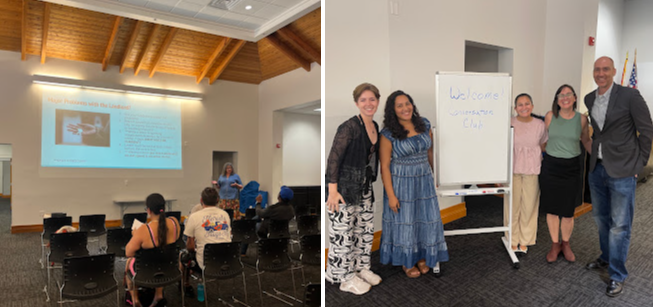
Library Presentations
We are incredibly grateful for our partnerships with the libraries across the counties we serve. These libraries are trusted community resources and play an important role in helping us connect residents with valuable housing information and services. Their support allows us to reach more people and strengthen the communities we serve.
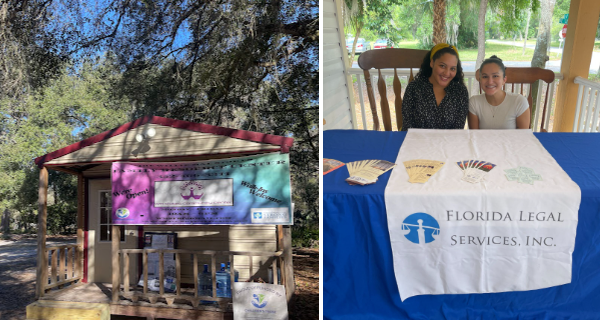
Tabling in Rural Areas
We’ve greatly appreciated the opportunity to build connections in our rural communities. We’re especially grateful to our partners in Micanopy, Hawthorne, Gilchrist, Levy, and Dixie for their support and for welcoming us into their communities. We look forward to continuing these meaningful partnerships and working together to make a positive impact.
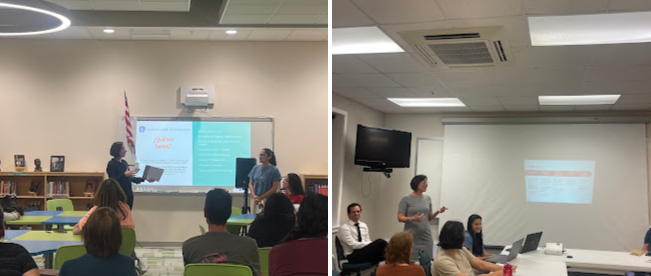
Tenants Rights Presentation
The Eviction Prevention Project has provided a variety of Tenant Rights presentations designed to equip renters with information about the eviction process and their legal rights. We are grateful to all of our community partners who welcomed us into their spaces, making it possible to share these valuable resources and empower tenants with knowledge.
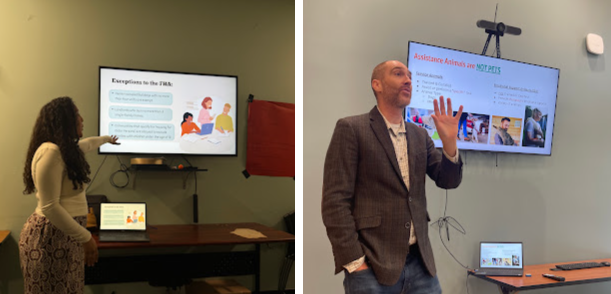
Fair Housing Presentations
Our Fair Housing team has delivered dozens of Fair Housing presentations, educating community members about the Fair Housing Act, the protected classes, and the various ways fair housing laws can be enforced. We enjoy connecting with the community through these presentations and appreciate every opportunity to share information, answer questions, and promote equal housing opportunities for all.
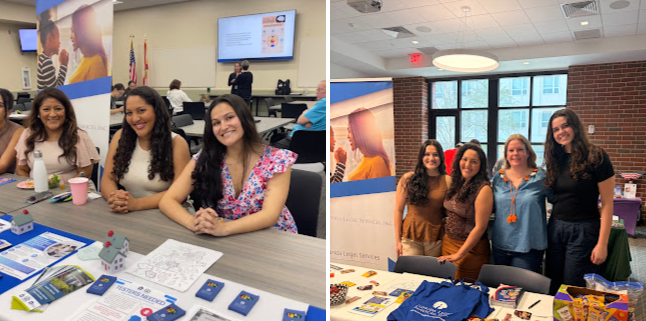
Collaborating with other Projects
The Housing Project values every opportunity to collaborate with other projects at Florida Legal Services. These partnerships allow us to connect community members with a wide range of legal resources and services that extend beyond housing. We are grateful for the opportunity to work together to provide comprehensive information and support that helps strengthen the communities we serve.
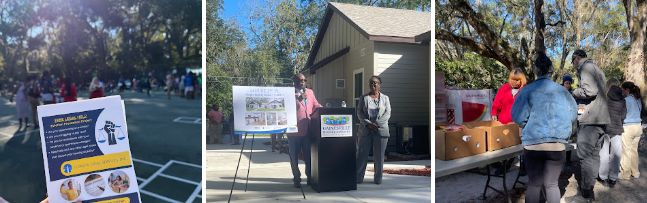
Community Building Events
Community engagement is at the heart of what we do. One of the most meaningful ways we connect with residents is by participating in and supporting community-building events throughout the counties we serve. From neighborhood gatherings and food distributions to community meetings and local events, we are grateful for every opportunity to build relationships, share valuable housing resources, and connect with the communities we are proud to serve.
Eviction Prevention Helpline - CALL: 888-780-0443
This helpline supports tenants, in the counties above, facing eviction or other housing-related challenges. Our operators are available to take calls about landlord-tenant disputes, housing authority voucher issues, and other housing concerns impacting low-income renters. Callers will be connected with an attorney who can provide legal advice over the phone and, in some cases, direct legal representation. Call us today to get the help you need!
The federal Fair Housing Act (FHA) protects you from discrimination in housing based on race, color, religion, national origin, sex, disability, and familial status. This applies to renting, buying, mortgages, appraisals, insurance, and looking for a place to live.
IF YOU THINK YOU’VE BEEN THE VICTIM OF HOUSING DISCRIMINATION, PLEASE CONTACT US AT:
407-801- 4224 (English)
850-680-1729 (Spanish)
fairhousing@floridalegal.org
www.floridalegal.org/fairhousing
IF YOU ARE AN ALACHUA COUNTY RESIDENT FACING BARRIERS TO HOUSING OR AN EVICTION, PLEASE CALL AND FOLLOW THE PROMPTS TO REACH A LIVE ALACHUA COUNTY OPERATOR:
888-780-0443 (English and Spanish)
www.floridalegal.org/evictionprevention
The work that provided the basis for this publication was supported by funding under a grant with the U.S. Department of Housing and Urban Development. The author and publisher are solely responsible for the accuracy of the statements and interpretations contained in this publication. Such interpretations do not necessarily reflect the views of the Federal Government.