April 2026 - Fair Housing Month Explained
< Back to All Newsletters
Welcome Note
April marks Fair Housing Month—a time to honor the progress we’ve made while recognizing the work still ahead. As we reflect on our outreach efforts so far, we also highlight the history and importance of the Fair Housing Act, a vital foundation for equitable access to housing.
The Fair Housing Act protects individuals and families from housing discrimination and affirms the right to safe, stable communities. This work remains as important as ever. Our team is committed to raising awareness, empowering residents, and ensuring you understand and can exercise your housing rights.
Fair Housing Month Explained
Did You Know…
Fair Housing Month is observed every April to commemorate the passage of the Fair Housing Act and to promote equal access to housing for all.
The Fair Housing Act was signed into law on April 11, 1968, during the civil rights movement, shortly after the assassination of Dr. Martin Luther King Jr., highlighting the urgent need to address housing discrimination.
The law prohibits discrimination in housing-related activities, including renting, buying, financing, and advertising housing.
Protected classes under the federal Fair Housing Act include: race, color, disability, familial status, religion, sex, and national origin
In addition to federal law, many state and local governments have expanded fair housing protections—so it’s important to learn the specific rights and protections available in your area and stay informed about how they apply to you.
So What Does It All Mean?
Fair housing laws help ensure that everyone has equal opportunity to live in safe, stable housing without fear of discrimination.
Discrimination can take many forms, including refusing to rent or sell, setting different terms or conditions, steering individuals to certain neighborhoods, or denying reasonable accommodations for people with disabilities.
At the same time, federal fair housing laws ensure that tenants cannot be treated differently or denied housing opportunities and necessary repairs because of protected characteristics such as race, national origin, disability, or family status.
Knowing these protections can help tenants advocate for safe housing, address repair issues early, and seek legal assistance if problems arise.
Through outreach events and presentations for homebuyers, renters, and housing providers alike, Florida Legal Services plays an important role in promoting education about the Fair Housing Act—and we encourage others in the community to join in raising awareness and advancing fair housing for all.
What Can We Do?
Fair Housing Month is a time to educate communities, recognize ongoing challenges, and reaffirm a commitment to equity and inclusion in housing. Reach out to us if you would like a presentation for your team or the community you serve.
Understanding fair housing rights empowers individuals to recognize discrimination and take action to protect themselves and others.
Local organizations and advocates often host events, workshops, and outreach campaigns throughout April to raise awareness and provide resources.
Be aware that if you were served with an eviction notice, you can call our Eviction Prevention helpline for FREE legal assistance. Call us today at 888-780-0443!
We utilize language line services for tenants with diverse linguistic backgrounds.
If you or someone you know is facing discrimination on the basis of a protected class, or needs legal assistance navigating housing related issues, do not hesitate to give us a call at 407-801-4224 or email us at fairhousing@floridalegal.org
Community Outreach
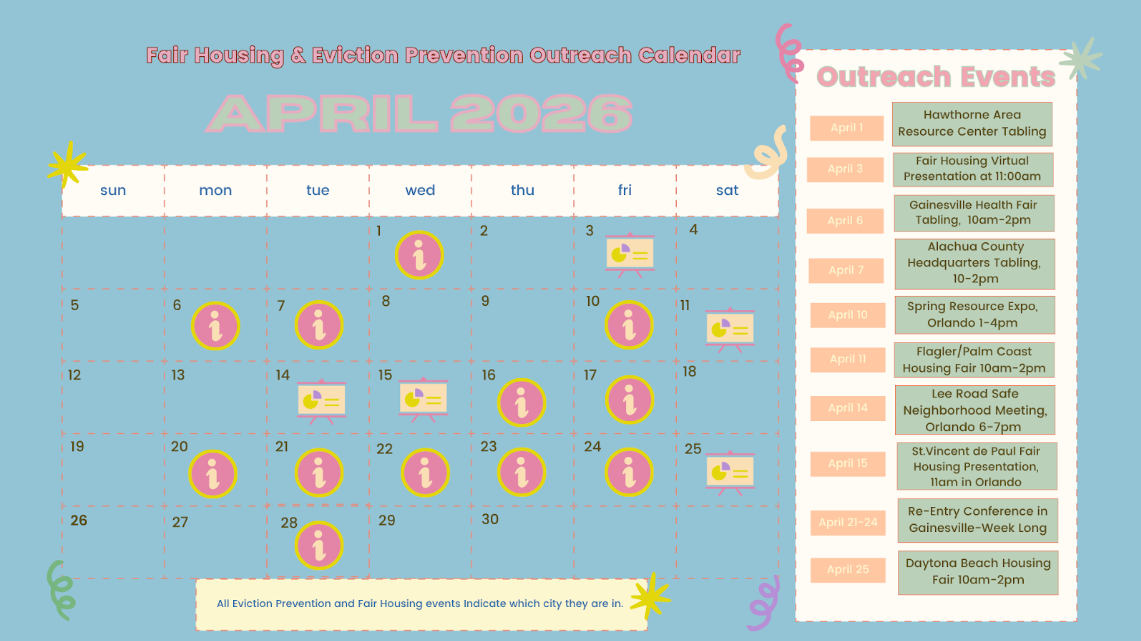
Upcoming Outreach Events
What We’ve Been Up To
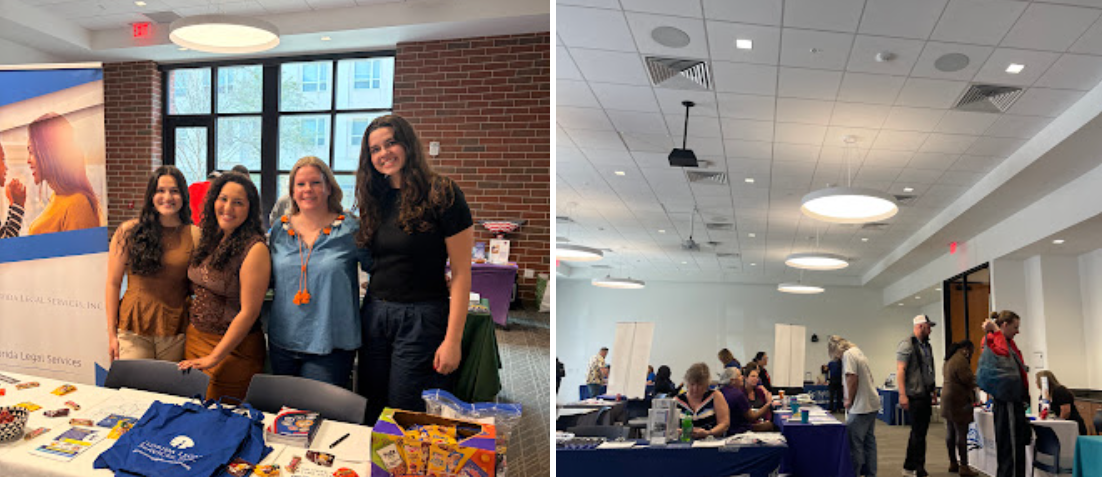
Gainesville Homeless Veterans Stand Down
This event brought together community partners and service providers for a powerful day of support and connection for local veterans experiencing or at risk of homelessness. In collaboration with our Fair Housing, Eviction Prevention, and Veterans Justice teams, we were proud to provide direct outreach, legal information, and resources to help veterans access stable housing and understand their rights. Events like this reflect our ongoing commitment to serving those who have served, ensuring veterans have the support they need to secure safe, stable housing and move toward long-term stability.
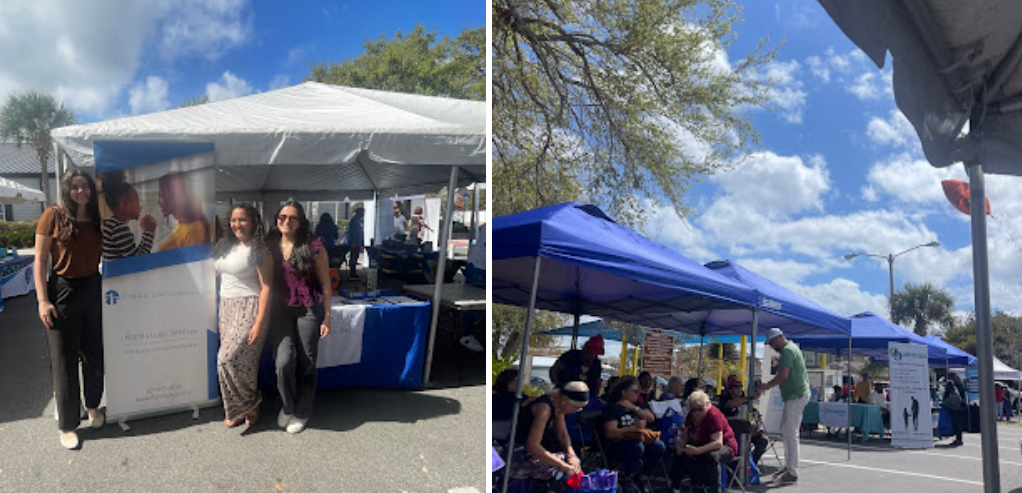
2026 Osceola County Community Resource Fair
The Veterans Justice and Housing Justice teams connected with community members and shared valuable resources with the patrons in Osceola County. While tabling at this event, we provided information and support to residents from across the area, explaining our services in both English and Spanish to ensure accessibility for a broader community. Events like this allow us to build meaningful connections and expand access to critical resources while helping residents better understand their housing rights and available services.
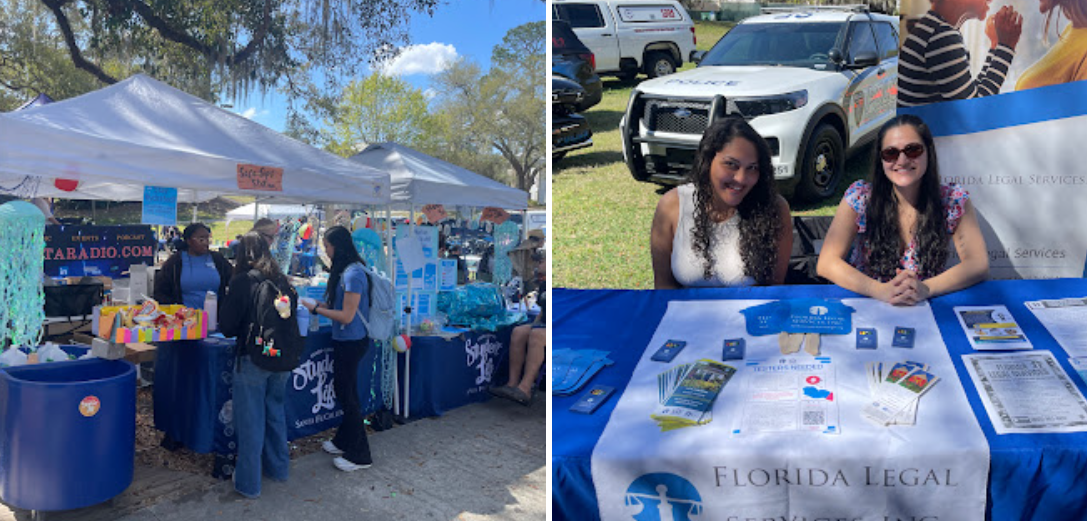
Santa Fe Community College Safe Spring Break Event
At the Santa Fe Community College Safe Spring Break Event, our team connected with students to share important resources focused on housing stability and safety. We provided information on protections under the Fair Housing Act, and highlighted how Florida Legal Services can support students facing housing-related issues. By engaging with students ahead of spring break, we aimed to ensure they feel informed, empowered, and better prepared to navigate their housing situations.
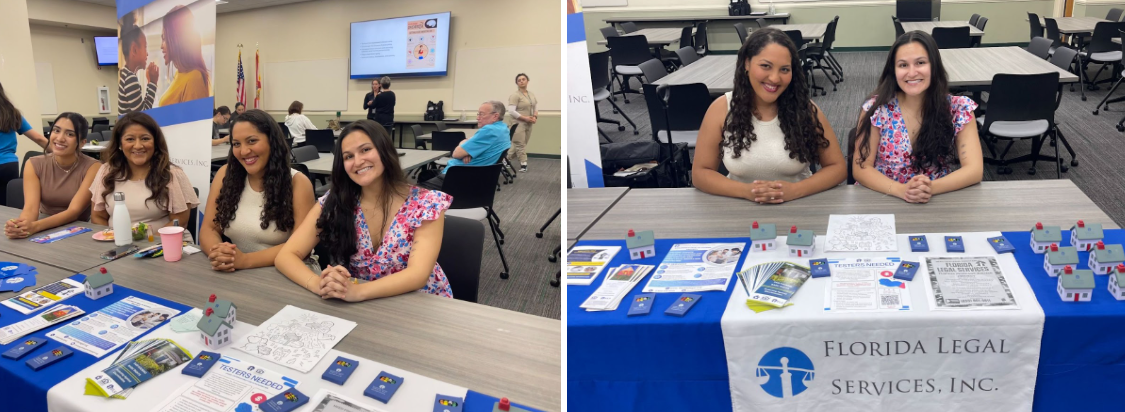
Stronger When Supported Women’s Self-Care Day
Hosted by the Orange County Sheriff’s Office, we were grateful for the opportunity to join a meaningful day centered on support and empowerment for women in the community. Florida Legal Services was proud to have team members from our Housing Justice, Survivor Advocacy, and Immigration units present to share information about the resources and services we offer. It was a great opportunity to engage in thoughtful conversations and help attendees feel more supported, informed, and connected to available services.
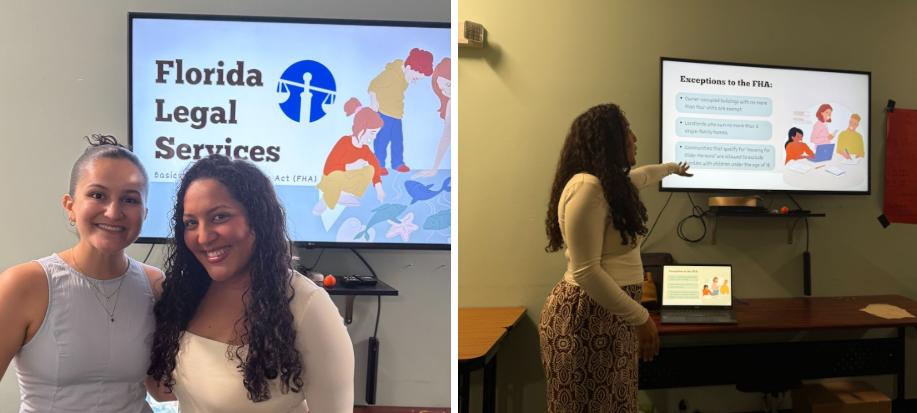
Library Partnership Brunch and Learn Presentation
Thank you to the Library Partnership for hosting us at their quarterly Brunch and Learn presentation. We were glad to have Rosemary from the Eviction Prevention team and Lola from the Fair Housing team present on housing protections, renters’ rights, and available resources. Thank you as well to everyone who attended. We appreciate the opportunity to connect and share this important information with the community.
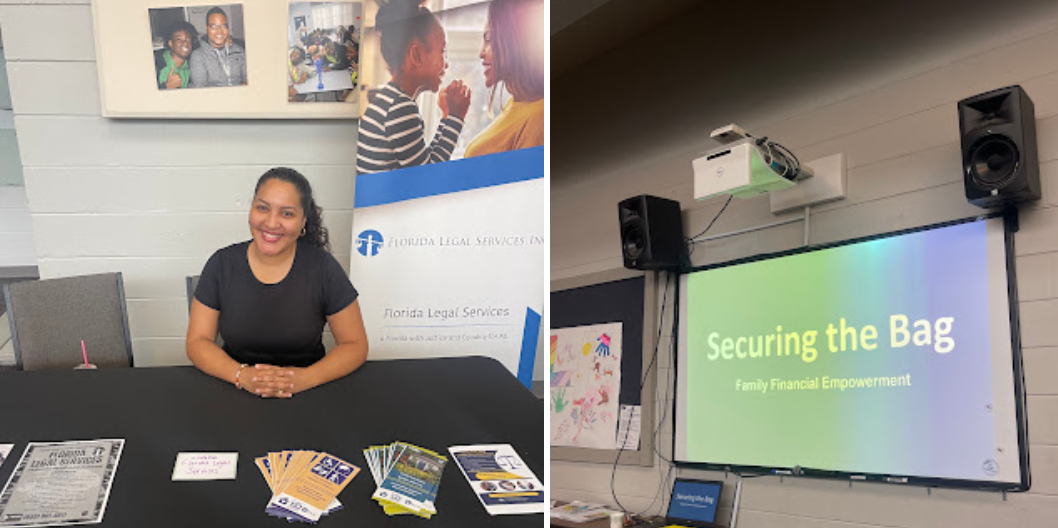
Securing the Bag Summit
Thank you to Faith Missions for including us in such a meaningful event. The Securing the Bag Summit was a wonderful opportunity to promote disaster preparedness and connect with the community. We truly appreciated the chance to share information about the legal resources available and to support those we serve.
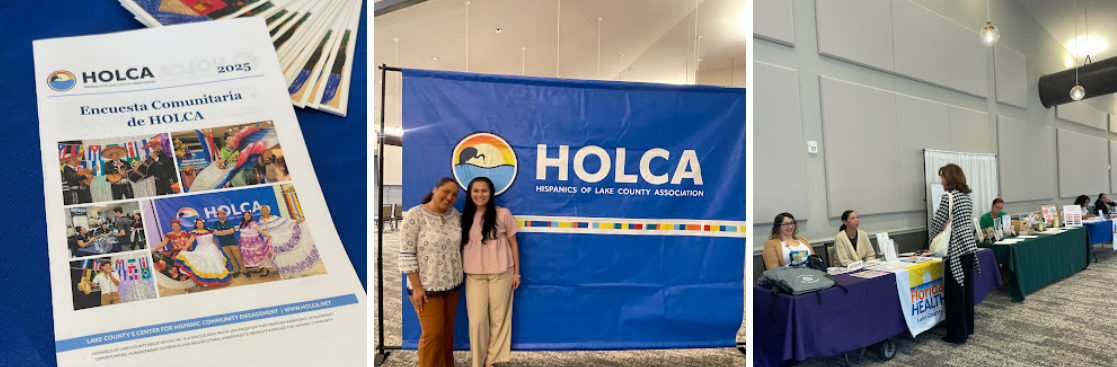
Lake County Bilingual Resource Fair
Our Housing Justice teams participated in two events hosted by the Hispanics of Lake County Association (HOLCA) to connect with community partners in the area. We tabled to share information about the resources and services Florida Legal Services offers, providing support in both Spanish and English. These events allowed us to engage directly with the community, answer questions, and help residents better understand their housing rights and available assistance.
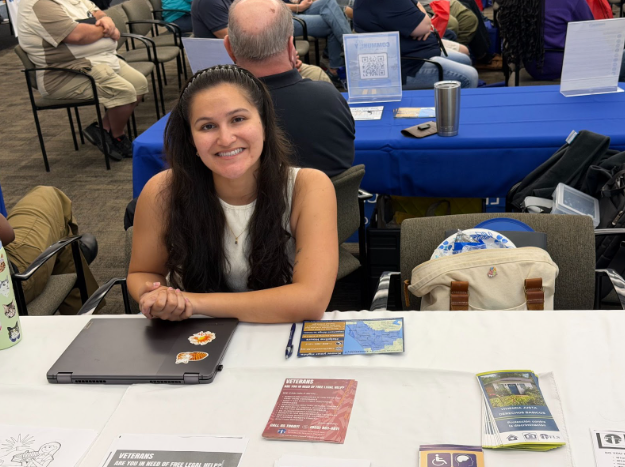
Marion Emergency Preparedness Expo
Tabling at the Marion County Emergency Preparedness Expo, hosted by the Center for Independent Living, was a fantastic experience! We enjoyed connecting with community partners and sharing more about the services and resources Florida Legal Services provides to support residents, particularly around housing stability and emergency preparedness.
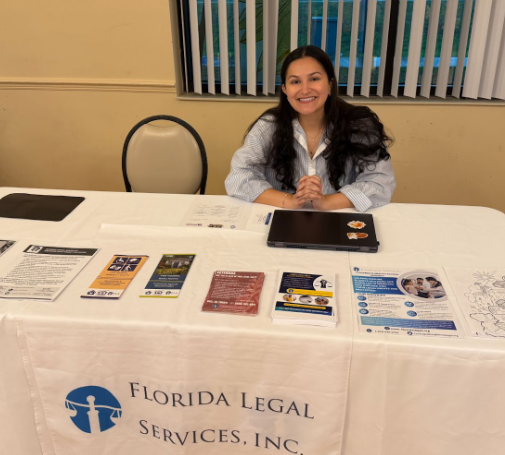
Alachua County Emergency Preparedness Expo
Thank you to the Center for Independent Living for hosting Alachua County’s event on emergency preparedness. The Eviction Prevention team tabled to connect with community members ahead of hurricane season. We shared important resources with renters on their rights, disaster-related housing protections, and how to prepare for potential disruptions. Events like this help residents be more informed and better equipped to maintain housing stability during emergencies. Thank you for inviting Florida Legal Services.
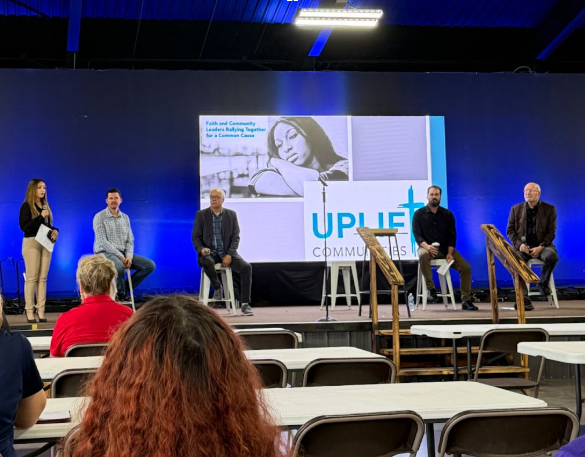
Uplift Tri-County
The annual Uplift Tri-County event brought together partners and organizations from Alachua, Dixie, and Gilchrist counties, offering a valuable opportunity to engage with the communities we serve. Florida Legal Services was able to share information about our statewide projects, connect attendees to housing justice resources, and better understand the unique needs of the region to provide more effective support.
Eviction Prevention in Alachua, Brevard, Dixie, Flagler, Gilchrist, Indian River, Lake, Levy, Marion, Orange, Osceola, Putnam, Seminole, St. Johns, Sumter, and Volusia County:
Eviction Prevention Helpline - CALL: 888-780-0443
This helpline supports tenants, in the counties above, facing eviction or other housing-related challenges. Our operators are available to take calls about landlord-tenant disputes, housing authority voucher issues, and other housing concerns impacting low-income renters. Callers will be connected with an attorney who can provide legal advice over the phone and, in some cases, direct legal representation. Call us today to get the help you need!
The federal Fair Housing Act (FHA) protects you from discrimination in housing based on race, color, religion, national origin, sex, disability, and familial status. This applies to renting, buying, mortgages, appraisals, insurance, and looking for a place to live.
IF YOU THINK YOU’VE BEEN THE VICTIM OF HOUSING DISCRIMINATION, PLEASE CONTACT US AT:
407-801- 4224 (English)
850-680-1729 (Spanish)
fairhousing@floridalegal.org
www.floridalegal.org/fairhousing
IF YOU ARE AN ALACHUA COUNTY RESIDENT FACING BARRIERS TO HOUSING OR AN EVICTION, PLEASE CALL AND FOLLOW THE PROMPTS TO REACH A LIVE ALACHUA COUNTY OPERATOR:
888-780-0443 (English and Spanish)
www.floridalegal.org/evictionprevention
The work that provided the basis for this publication was supported by funding under a grant with the U.S. Department of Housing and Urban Development. The author and publisher are solely responsible for the accuracy of the statements and interpretations contained in this publication. Such interpretations do not necessarily reflect the views of the Federal Government.